
Can a backyard paver patio run right up to a privacy fence?
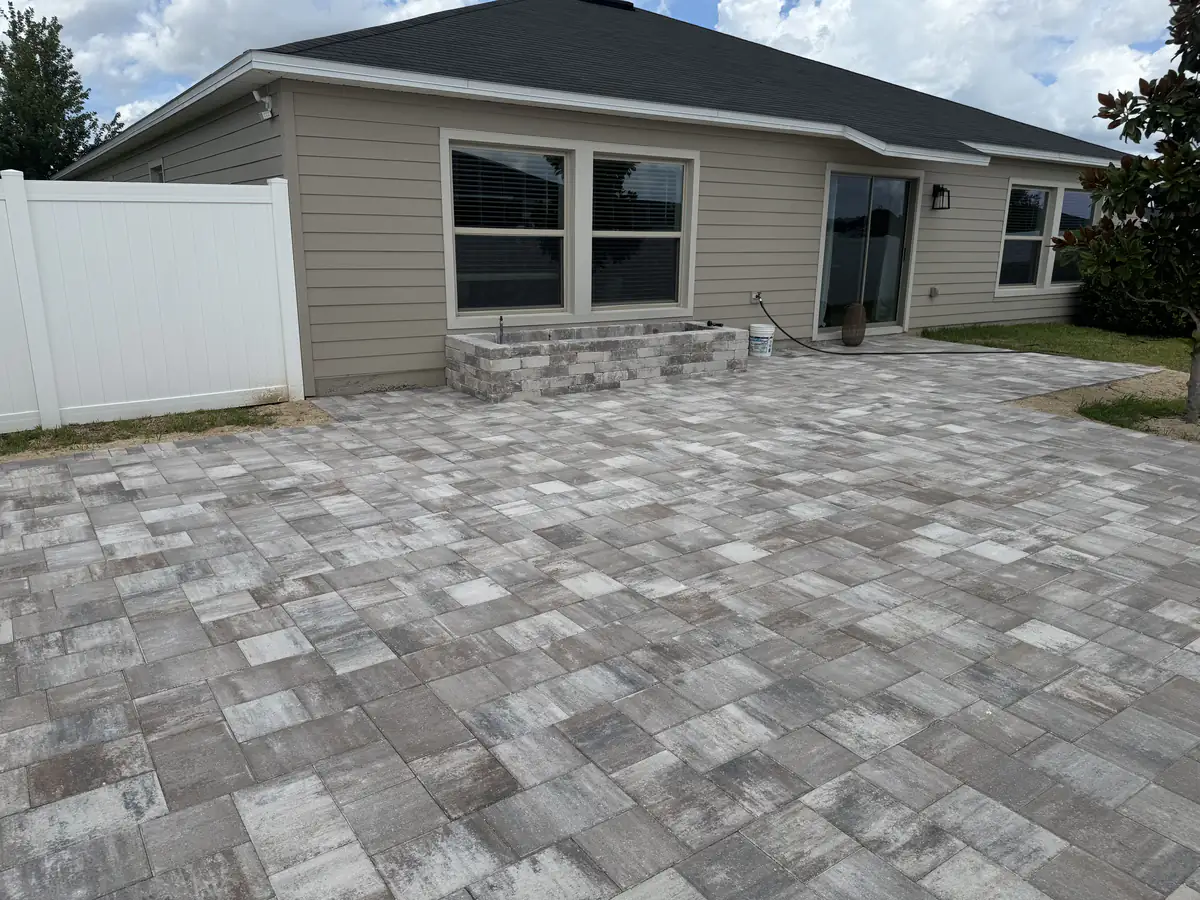
It can, as long as the edge is held in place and the water has a way out. This backyard paver patio in Ocala runs from the back of the house all the way to the white vinyl privacy fence, and it uses the whole width of the yard.
Two things change when a patio meets a fence. First, the edge. Pavers along a fence line still need restraint, or they slowly spread outward as people walk on them. Second, drainage. If the patio slopes toward it, water runs to the fence line and sits along the posts every time a summer storm rolls through.
So the grade on a job like this pitches water away from the house and toward places it can soak in, not into a puddle at the fence. You cannot see that in the photo. You would notice it the first rainy week if it was done wrong. Filling the yard edge to edge also means no strip of grass to mow along the fence, which the owners of wide patios tend to appreciate a lot.
Which paver color stays cooler on a sunny patio?
Lighter colors. Tan, cream and light grey stay noticeably cooler underfoot than charcoal or dark brown in Florida sun.
This patio is a grey and white blend, and the back of the house faces an open yard with not much shade. That combination was the point. Bare feet, dogs, kids running out the sliding door in July. A dark paver would soak up heat all afternoon and hold it into the evening.
The blend also hides everyday dirt better than a solid light color would. Sand tracked in from the yard and leaf litter disappear into the variation instead of standing out on a flat field. Color choice is one of the things we spend real time on at the consultation, because manufacturers keep adding new tones and the options today are wider than they were a few years ago. We bring current samples from Tremron, Belgard and Flagstone and hold them up against your siding and trim. You can compare more patio layouts on our paver patios page before we visit.
How deep is the base under a backyard patio in Ocala?
Typically 8 to 10 inches for a patio here. Sandy soil is the reason.
Clay packs down on its own. Marion County sand does not, so a patio in Ocala needs more excavation and more compacted material underneath than the same patio would somewhere with heavier ground. We dig out, bring in aggregate, and compact it in layers until it is firm. Then comes the bedding layer. We use limestone screenings, which some people call stone dust, and we compact those as well before a single paver gets set.
People sometimes read online that screenings are the wrong bedding material. We have gone back to look at patios we built years ago. The ones sitting on a compacted base with compacted screenings are still flat. Compaction is the variable that decides whether a patio stays level, not the material.
A large patio like this one has a lot of surface area to keep flat, so that step gets extra attention. The pavers in Ocala page explains more about how local soil shapes our installs.
Should a new patio tie into planters or walls at the house?
If there is a planter or bed along the back wall, yes. Tying the patio into it makes the whole space look planned.
On this home a low block planter sits under the back windows. The patio butts right up to it, so there is no leftover strip of sand or mulch between the pavers and the house. It softens that long, flat wall and gives the owners a place for plants without pots crowding the patio. Low walls like this are simple to add when they are part of the plan from the start and a pain to fit in later.
If you want seating built in, a short capped wall can do double duty. We built one along the edge of this patio with a small seat wall in The Villages. Taller walls that hold back soil are a different job, and our retaining walls page covers those.
PROJECT GALLERY
Every Photo From This Job
YOUR PROJECT COULD BE NEXT
Want to use your whole backyard, fence to back door?
Call (352) 651-6077 and we will measure the yard, check where the water goes, and bring light color samples to your Ocala home.