
Is it worth paving the narrow alley beside your house?
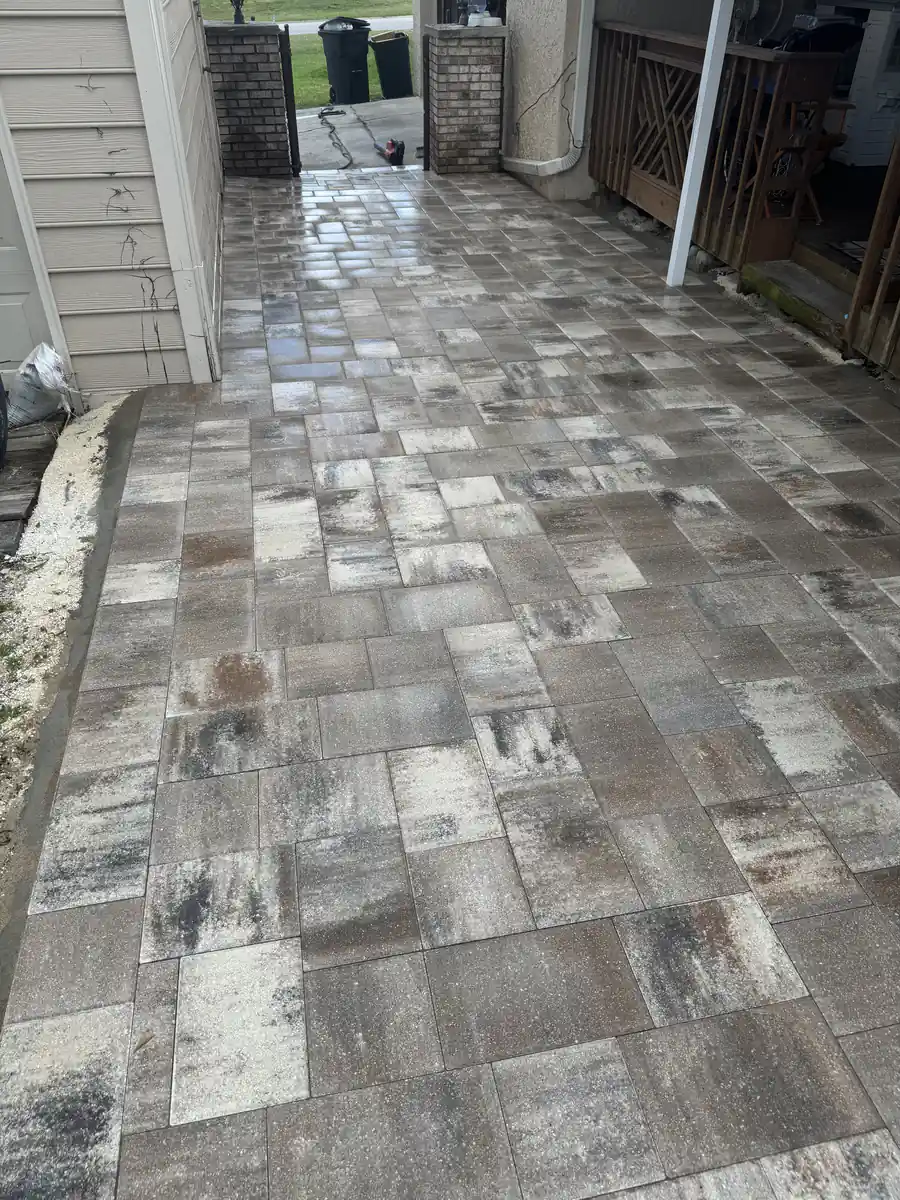
If you walk it every trash day, yes. This side alley in Ocala runs between the siding and a block wall out to the gate, and the trash cans live at the far end. Before, that was bare ground.
We used a large format paver in a grey, white and charcoal blend. Bigger units suit a tight space. With fewer joints across the width, the pattern stays calm even when you can only see a few feet of it at a time, which is always the case in an alley this narrow. The photo was taken wet. That is roughly how it looks after an afternoon storm.
Alleys like this collect water from two directions, the roof on one side and the wall on the other. Grading and the joint sand matter more here than almost anywhere else on the property.
It is a small job next to the fire pit, but it is the one the owners will use every single week.
How big should the paver pad around a fire pit be?
Big enough that chairs sit on pavers, not on sand. That is the practical test.
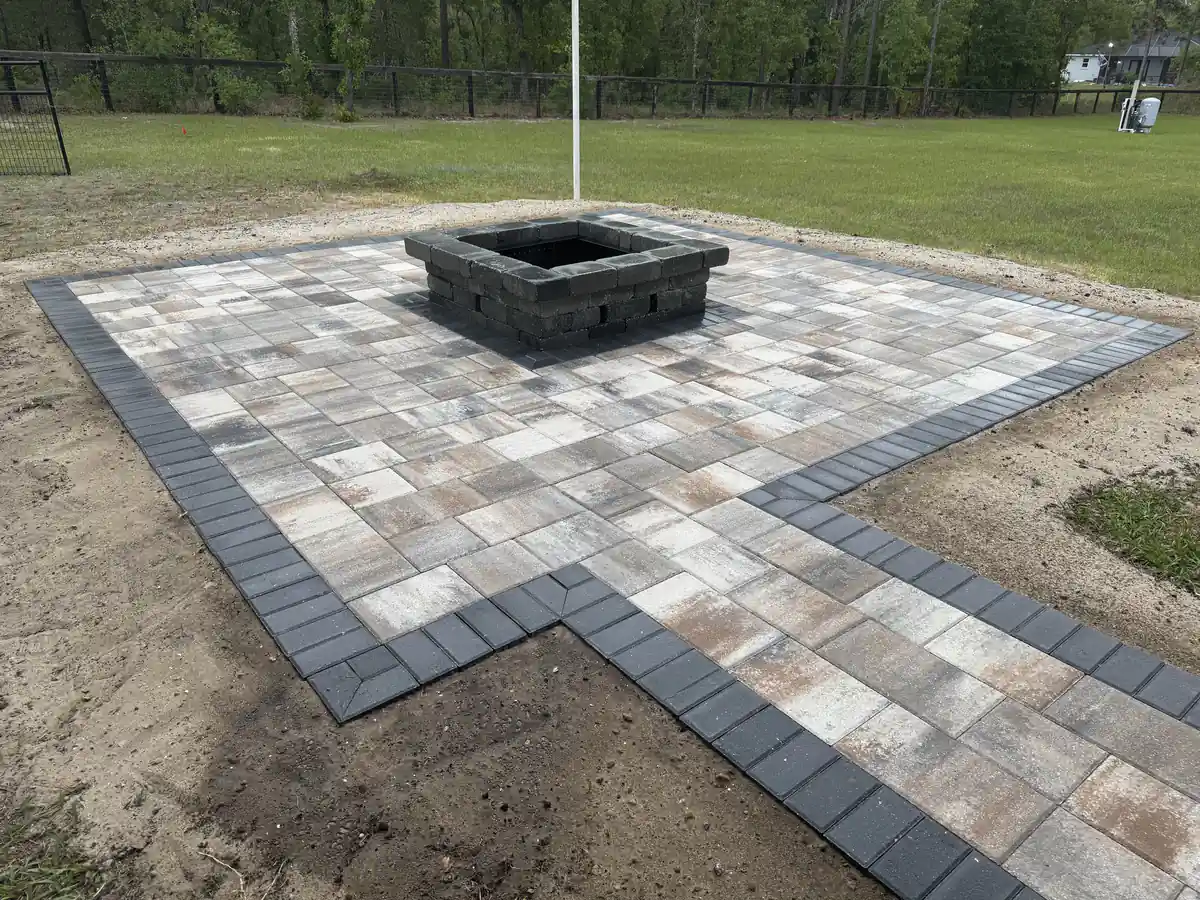
The pit on this job is a square block unit set in the middle of the pad, and the pavers run well past it in every direction. A short arm reaches back toward the house, so the pad reads as part of the yard instead of an island dropped in the middle of it. A charcoal soldier course wraps the whole outline, L shape included, which keeps the edge crisp against the surrounding sand while the lawn comes in.
The paver blend mixes grey, tan and a little rust. It pairs well with the darker block of the pit and does not show ash or soot as quickly as a very light paver would.
When we plan a paver fire pit, we start with how many people will sit around it and where they will walk from. The pit size comes after that. Setting the pad size first saves a lot of chair legs sinking into the yard.
Does a fire pit pad need the same base as a patio?
Yes. A fire pit pad gets foot traffic, heavy block and furniture, and it sits out in the open where Ocala rain hits it hardest.
This backyard is mostly sand, and Marion County sand does not compact on its own. So the pad is built the way we build every patio: excavate, lay aggregate in layers, compact the base, add a bedding layer of limestone screenings, compact that, then set the pavers. The block pit sits on that same prepared ground. Cutting corners under a heavy pit is how you end up with a leaning ring and a dip beside it.
Every joint gets Gator Maxx G2 polymeric bonding sand. It locks the pavers together, leaves weeds nothing to root in, and holds up far better against washout than plain sand.
The whole surface is sealed afterward. We recommend resealing every two to three years. Fire pits are one piece of a bigger picture, and our hardscapes page shows how they fit with walls, patios and walkways.
What should you ask before hiring someone to build a backyard fire pit in Ocala?
Ask what goes under it. Most people ask about the block color and the size of the ring, and those matter. The base is what decides whether it still looks right in five years.
A few questions tell you a lot. How deep will you dig? What goes in the bedding layer, and is it compacted separately? What joint sand do you use? Will the pad be sealed, and how often should it be resealed after that? If the answers are vague, the work probably will be too.
We have been doing this for more than 30 years. The failed installs we get called to fix almost always trace back to how they were built, not to the pavers or the block.
Ask about the rest of the yard, too. It is cheaper to plan an alley, a walkway and a fire pit together than to add each one later. Read more about how we work with pavers in Ocala, then request a free estimate and we will come out.
PROJECT GALLERY
Every Photo From This Job
YOUR PROJECT COULD BE NEXT
Want a fire pit your chairs can actually sit level around?
Call us at (352) 651-6077 for a free on site visit and we will size the pad with you.