
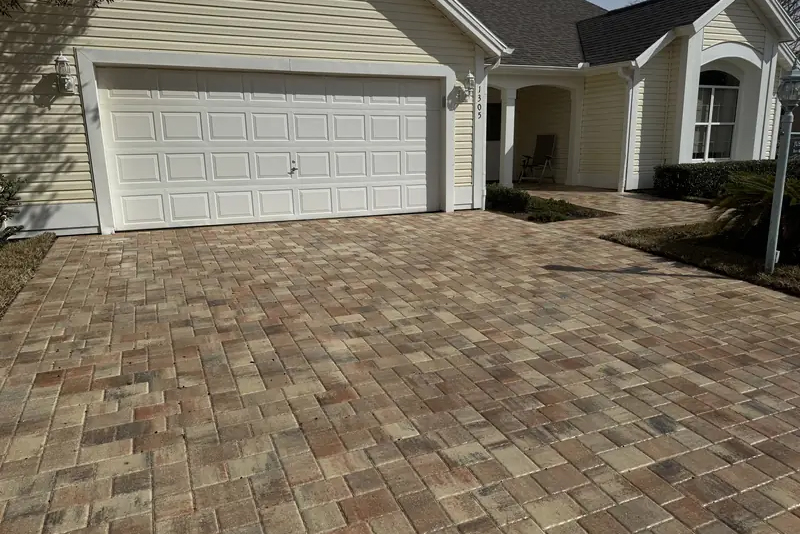
Polymeric sand is one of the most important materials in a paver installation, and one of the least talked about in conversations between homeowners and contractors. It is not a detail. It is the material that keeps joints stable, resists weeds, and protects the long-term integrity of the surface. Contact Benchmark Pavers at (352) 651-6077 to ask about the products used in every installation.
What is polymeric sand, and how is it different from regular joint sand?
Standard joint sand is exactly what it sounds like: fine sand swept into the joints between pavers to fill the gaps. It stays as sand. It can wash out in rain, blow out in wind, and does nothing to resist weed germination. Insects can excavate it. Regular maintenance involves adding sand back as it leaves.
Polymeric sand contains a binder, typically a polymer additive, that activates when the sand is wetted after installation. As it dries, the binder hardens within the joint and creates a firm, cohesive material that resists erosion, limits weed germination, and reduces insect activity in the joints. A properly installed paver driveway or patio with quality polymeric sand in the joints behaves completely differently over time than one filled with plain sand.
How is polymeric sand properly installed?
The process involves sweeping the dry sand into the joints until they are filled, then using a plate compactor to settle the sand fully into the joint, then repeating the sweep and compact cycle until the joints are properly filled. After that, the surface is blown or swept clean to remove any excess sand from the paver faces, and then the entire surface is thoroughly wetted to activate the polymer binder.
Getting this process right matters. Excess polymeric sand left on paver faces when water is applied will bond there permanently and leave a visible haze that is difficult to remove. Insufficient water during activation leaves the binder incompletely cured, which reduces the sand's hardened strength. The material has specific application requirements, and following them is what produces the result it is designed for.
Has polymeric sand improved in recent years?
Yes, meaningfully. The paver industry continues to develop upgraded versions of polymeric bonding sand with improved binder chemistry, better haze resistance, and wider compatibility across paver types. Benchmark Pavers stays current with these product developments because using the current generation of materials matters for surface performance. An installation using five-year-old product formulations when better options are available is a missed opportunity for the client. The same applies to paver sealers, which have also improved considerably in durability and UV resistance over recent years.
What happens if an installer uses regular sand instead of polymeric sand?
Joint erosion is the first sign. Regular sand washes out over time, creating open gaps between pavers. Open gaps allow organic debris to accumulate, which is where weeds get their start. They also allow ants and other insects to excavate, creating subsurface disturbance that can contribute to paver movement over time. A surface installed with plain joint sand requires more ongoing maintenance and is more vulnerable to the problems that give pavers a bad reputation.
The cost difference between polymeric sand and standard joint sand is not significant relative to the overall cost of a paver installation. It is not a place where a quality installer cuts costs, and if a contractor quote specifically mentions avoiding polymeric sand as a cost savings, that is worth noting before signing a contract.
Does polymeric sand eliminate weeds completely?
It reduces weed germination significantly in properly installed and maintained surfaces. Combined with paver sealing every two to three years, which reinforces the joint material and adds a layer of surface protection, a correctly installed paver surface with quality polymeric sand should not develop meaningful weed problems under normal conditions. Some wind-blown seed and surface debris will always exist in an outdoor environment, but the conditions that allow weeds to establish and thrive in joints are specifically what polymeric sand and sealing work together to prevent. Talk to Benchmark Pavers at (352) 651-6077 about materials and maintenance before your project starts.
Get in touch with us
Don’t hesitate to get in touch with us today to schedule a consultation and learn how we can help you achieve your construction goals.