
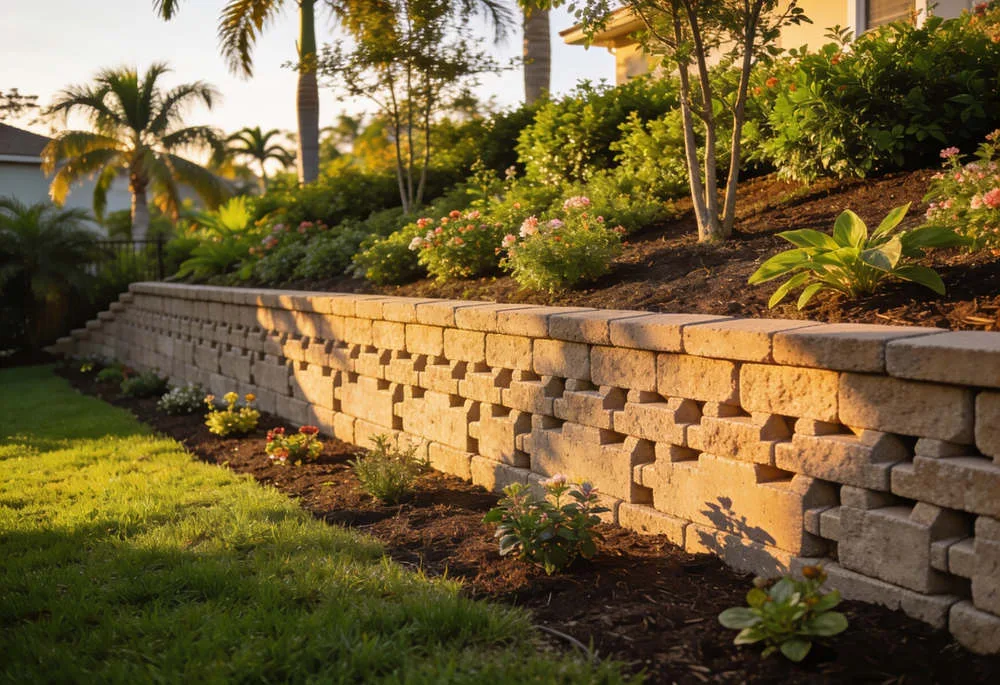
You may need a retaining wall if soil washes downhill during storms, water collects at the bottom of the slope, the yard is difficult to mow, or the ground is creeping toward a patio, driveway, or foundation. Near Downtown Ocala, a properly designed wall can stabilize the slope while creating safer, more usable outdoor space.
Call Benchmark Pavers at (352) 651-6077, or request a free on-site assessment from Benchmark Pavers before erosion becomes a larger drainage or structural problem. Properties near Silver Springs State Park can receive intense seasonal rain, so the wall must manage water as carefully as it holds back soil.
A sloped lot near the World Equestrian Center may look stable through the dry months, then lose soil quickly once repeated storms arrive. Bare patches, exposed roots, muddy runoff, and a slope that seems to move a little each season are warnings worth taking seriously.
Signs that the slope needs more than landscaping
Not every incline needs a wall. A gentle slope with healthy vegetation and controlled drainage may remain stable for years. The concern starts when the grade is no longer holding its shape or water has nowhere safe to go.
Watch for soil collecting at the bottom of the hill after rain. Look for channels cut into the ground, leaning fence posts, widening gaps beside a walkway, or sections of lawn that are becoming too steep or uneven to maintain safely. Pooling water near the house deserves faster attention because drainage pressure and moving soil can affect nearby improvements.
If you are asking, "Do I need a retaining wall for a sloped yard in Ocala?" the strongest clue is repeated change. One heavy storm may move mulch. A slope that keeps losing soil, sinking, or sending water toward the home needs a more permanent solution.
What a segmental retaining wall actually does
A segmental retaining wall uses interlocking concrete units and its own mass, along with properly prepared soil and reinforcement where required, to resist the pressure of the retained ground. It is not simply a decorative stack of blocks.
The wall can hold the slope in place, slow erosion, and create level terraces for planting, seating, or easier access. On a difficult yard, that new usable space may be as valuable as the erosion control.
Professional retaining wall installation should be designed around the height of the wall, the load above it, the soil, drainage, and the shape of the property. A low garden wall and a wall supporting a driveway are not the same project.
Florida rain makes drainage part of the structure
Water trapped behind a retaining wall adds pressure. If it cannot drain, the wall may begin to lean, bulge, separate, or settle unevenly. Heavy seasonal rain in Ocala makes this one of the most important parts of the installation.
A durable wall typically needs free-draining backfill, a planned outlet for water, and grading that keeps runoff from pouring over the top. Depending on the project, drainage pipe and filter fabric may also be used. The exact design should follow the site rather than a copied detail from another yard.
Good drainage is quiet. You may never notice it working, which is precisely the point.
Base preparation is where lasting walls begin
The first course of block must sit on a properly excavated, compacted, and level base. If the base settles, the wall follows it. A slight error at the bottom becomes more visible with every additional course.
Block selection matters too. Segmental wall units differ in size, setback, connection method, and intended use. Taller walls or walls carrying added loads may need geogrid reinforcement and engineering. Choosing a block because it looks good is not enough.
Benchmark Pavers approaches walls as functional hardscapes, with attention to the base, drainage, backfill, and block system. That is the difference between engineering a wall and merely stacking material until the slope is covered.
A retaining wall can make the yard easier to use
Many homeowners first consider a wall because mowing has become awkward or erosion keeps undoing their landscaping. Terracing can turn one steep grade into smaller, manageable levels. A lower area may become a patio or walking path, while the upper level remains planted.
The layout should still respect drainage. Flat space is useful only if water is directed away from the home and does not collect behind the wall or on the new terrace.
What affects the cost
Retaining wall pricing varies widely because height, length, access, soil removal, drainage work, block choice, and reinforcement all affect the job. A short landscaping wall may fall into a very different range than a tall structural wall on a difficult slope.
Be cautious with quotes based only on a photograph or rough length. An on-site assessment can reveal soft soil, buried drainage problems, limited equipment access, or loads above the wall that change the design.
Have the slope inspected before more ground is lost
A wall that is properly planned can stop recurring erosion and make an awkward yard easier to enjoy. A wall without the right base or drainage may become another problem on the property.
Call Benchmark Pavers at (352) 651-6077, or book a free on-site assessment and quote with Benchmark Pavers to determine whether your Ocala or The Villages yard needs a retaining wall and what the slope requires.