
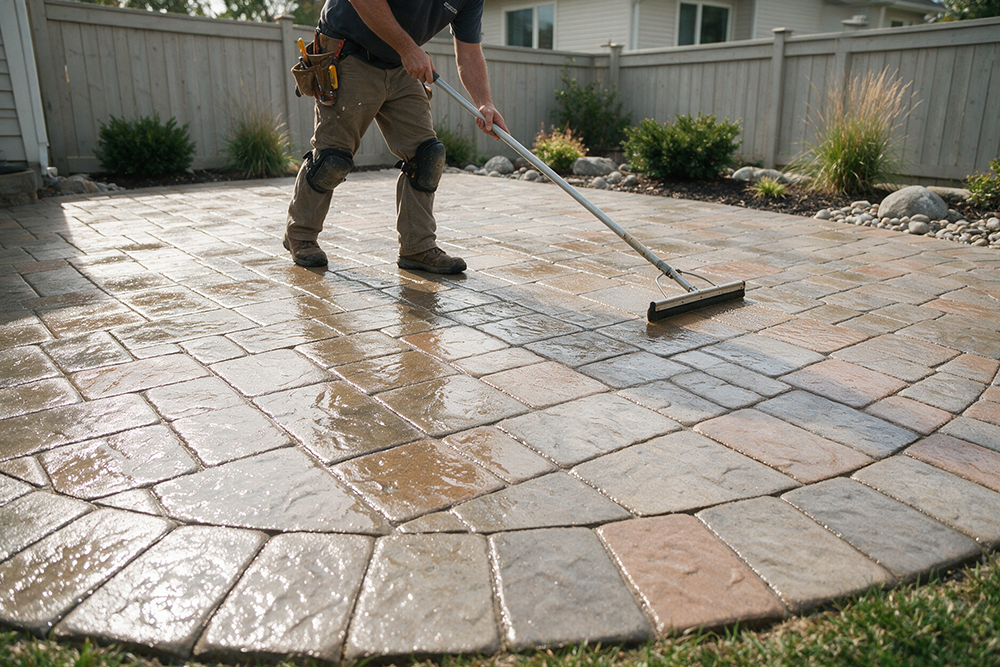
Paver sealing is the maintenance task that most homeowners either forget about or push off longer than they should. It is not an optional upgrade. It is the scheduled maintenance that determines whether a paver driveway or patio continues to look and perform the way it did when it was installed. Contact Benchmark Pavers at (352) 651-6077 with questions about your paver surface's maintenance schedule.
How often do pavers actually need to be sealed?
Every two to three years is the standard recommendation for most residential paver driveways and patios. The specific interval depends on factors like sun exposure, traffic level, and the climate the surface is in. A driveway in full Florida sun with daily vehicle traffic will likely need sealing closer to the two-year mark. A lightly used patio in a shaded area might go closer to three.
The way to know it is time is to do a simple water test. Pour water on the surface. If it beads and rolls off, the sealer is still active. If it absorbs quickly into the paver, the sealer has degraded and the surface is no longer protected. That test takes thirty seconds and tells you more than any calendar schedule.
What does paver sealer actually do for the surface?
A quality paver sealer does several things at once. It locks in the color and surface finish of the pavers, protecting against UV-related fading that accumulates over years of Florida sun exposure. It reinforces the polymeric sand in the joints, which helps maintain the hardened joint that resists weeds and joint erosion. And it creates a surface barrier that limits oil, stain, and organic material absorption into the paver face, making routine cleaning significantly easier. A paver patio or driveway that is sealed on schedule holds its appearance and structural integrity far longer than one that is not.
Paver sealer products have also improved substantially in recent years. Current generation sealers offer better UV resistance, longer durability between applications, and formulations designed to enhance rather than alter the paver's natural color and finish. Applying an outdated sealer product when better options exist is one of the things worth asking a contractor about before the work is done.
What actually happens to a paver surface when sealing is skipped for years?
The joint material degrades first. Polymeric sand that was properly installed and activated will hold up well initially, but without sealer reinforcing it on schedule, it gradually loses its binding strength. Once the joint material softens and begins to erode, organic debris accumulates in the open joint. Weeds germinate. Insects excavate. The cycle that gives pavers a bad reputation gets underway.
The paver surface itself also becomes more vulnerable without sealer. Oil from vehicles, tannins from nearby trees, and general surface staining absorb into an unsealed paver face over time and become increasingly difficult to remove. Some staining that has been allowed to penetrate deeply for years is not reversible without resurfacing. The same staining caught early, on a sealed surface, usually comes off with a pressure wash and appropriate cleaner
Can you seal pavers yourself, or does it require a professional?
DIY sealing is possible, and homeowners do it successfully. The main requirements are proper surface preparation, which means the pavers need to be clean and fully dry before sealer goes down, and the right product for the paver type and desired finish. Sealer applied over a damp surface or over residue traps moisture underneath and can cause whitening or hazing that is hard to correct.
Professional sealing is worth the cost for most homeowners because the surface preparation and application process done correctly extends the time before the next sealing cycle is needed. A professional job every two to three years is often better economics than a DIY application done with shortcuts that requires another round sooner.
What is the full maintenance picture for a properly installed paver surface?
Short and manageable. Polymeric sand in the joints at installation, sealing every two to three years, and routine cleaning as needed. That is the full ask for a surface that should hold up for decades without significant repair. The homeowners who end up with weed and sinking problems are almost always the ones who either had a poor initial installation or let the maintenance schedule lapse for too long. A correctly installed surface maintained consistently is one of the more durable and lower-maintenance hard surface options available. Reach out to Benchmark Pavers at (352) 651-6077 to talk through your current surface's condition or to start a new project the right way.
Get in touch with us
Don’t hesitate to get in touch with us today to schedule a consultation and learn how we can help you achieve your construction goals.