
You walk out your back door to enjoy the morning sun, but all you see is a gray, cracked, and stained concrete slab. It doesn’t exactly scream "backyard oasis," does it? Many homeowners in Ocala dream of upgrading to beautiful, interlocking pavers but hesitate because they dread the thought, and the cost, of ripping out their existing concrete patio or driveway.
The demolition process is loud, messy, and expensive. It involves jackhammers, dumpsters, and hauling away tons of heavy debris. Naturally, you might wonder if there is an easier way. Can you simply skip the destruction and lay new pavers right on top of the old surface?
In many cases, the answer is yes. This method, often called an overlay, can save you time and money while completely transforming your outdoor space. However, it isn’t the right solution for every home. Before you start planning your new patio, you need to know if your existing concrete is up to the task.
Is it actually possible to install pavers over concrete?
Yes, you can absolutely install pavers over existing concrete, provided the conditions are right. This is actually a common practice for patio and driveway paver installation throughout Central Florida. The concrete acts as a stable, rigid base for your new pavers.
However, the condition of that base matters immensely. If your concrete is severely heaved, significantly uneven, or crumbling into dust, covering it up is just a temporary fix. Think of it like painting over a rusty car; the new coat might look good for a month, but the underlying problem hasn't gone away. If your concrete has minor hairline cracks or surface discoloration, though, it's likely a perfect candidate for an overlay.
Why would you choose an overlay instead of removal?
Why do so many homeowners choose to keep their old concrete? The biggest motivation is usually the budget. Demolishing and hauling away an old concrete driveway can cost between $2 and $6 per square foot before you even buy a single paver. By using the existing slab as your base, you allocate your entire budget to the beautiful new materials rather than paying for labor and disposal fees.
There is also the factor of convenience. Removing a concrete slab can take days of noisy work that disrupts your household and potentially damages your surrounding landscaping. An overlay project is much cleaner and faster, getting you back to enjoying your yard sooner.
What potential problems should you watch out for?
While overlaying is efficient, are there risks involved? The most critical issue to watch for is height. Pavers typically add 2 to 3 inches of height to your surface. You need to ensure this extra height won’t block your doors from opening or bring the ground level too close to your home's siding, which can encourage rot or termites.
Drainage is another major consideration. Your current concrete slab likely (and hopefully) slopes away from your house to keep water out. When you add pavers, you must maintain that slope. If the overlay is done incorrectly, you could end up with water pooling on your new patio or, worse, running back toward your foundation.
How does the Ocala climate affect installation?
Living in Central Florida means we have to deal with intense heat and heavy rainfall, often in the same afternoon. Ocala gets over 50 inches of rain a year, which is significantly more than the national average. This moisture is why proper drainage is non-negotiable.
Additionally, our soil composition can be tricky. While the concrete base helps, the edges of your project need to be secured properly to prevent shifting during our wet season. If you're dealing with a sloped yard near neighborhoods like Silver Springs Shores or the rolling hills closer to the World Equestrian Center, you might even need to incorporate a retaining wall installation to manage soil erosion and keep your new paver installation secure.
How does the installation process work?
So, how do the pros actually get this done? It isn't as simple as just gluing bricks to the ground.
- Inspection and Repair: First, we inspect the concrete. Any large cracks need to be sealed to prevent weeds or sand from migrating through.
- Perimeter Retention: Because the pavers sit on top of the slab, the edges need to be held in place. We install a border, often using mortar or a specialized edging restraint, to keep the pavers from sliding off the edge of the concrete.
- The Sand Bed: This is the secret sauce. We lay a roughly 1-inch layer of bedding sand over the concrete. This sand bed creates a cushion that allows water to drain beneath the pavers and lets the pavers settle evenly without rocking on the hard concrete.
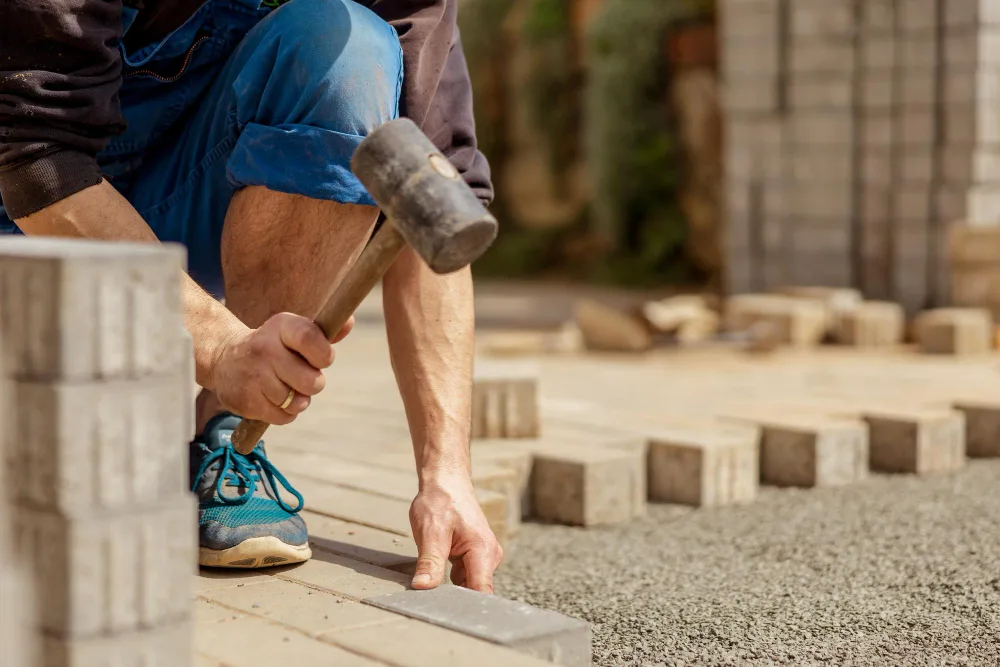
- Laying the Pavers: The pavers are placed in your chosen pattern on top of the sand.
- Compaction and Locking: Finally, we sweep polymeric sand into the joints and compact the surface to lock everything together.
What happens if the concrete is cracked?
Does a cracked driveway mean you can't use pavers? Not necessarily. Small, stable cracks are generally fine because the sand bed acts as a buffer between the concrete movement and the pavers. This is one of the main benefits of "flexible" pavement like pavers, they can shift slightly without breaking.
However, if large sections of your driveway are lifting or sinking independently, what we call "heaving", that concrete needs to come out. Attempting pavers installation in Ocala Florida over unstable ground will eventually result in a wavy, uneven surface that creates tripping hazards.
How much does this typically cost?
What kind of investment are you looking at for this type of project? While prices vary based on the paver style you choose, professional installation for a paver patio generally ranges from $12 to $25 per square foot.
Since you're skipping the heavy demolition phase, you will likely land on the lower to middle end of cost estimates compared to a full dig-out. Remember, according to home improvement data from HomeGuide, just removing your old slab can add thousands to the bill. Saving that money allows you to upgrade to premium pavers or add features like a fire pit.
Is maintenance harder with an overlay?
Once installed, are these pavers harder to take care of? Not at all. The maintenance is very similar to a standard installation. You will want to keep the joints filled with sand and occasionally seal the pavers to protect the color from the Florida sun.
One specific tip for overlays: check the edges. Because the new surface is higher than the surrounding ground, keep an eye on the perimeter to ensure your grass or mulch hasn't washed away, exposing the bedding sand.
Should you try this as a DIY project?
Can you tackle this on a weekend with a few buddies? While you can buy pavers at a box store, overlaying concrete requires a specific skill set regarding drainage and edge retention.
If you don't get the sand bed level, your patio will be wavy. If you don't secure the perimeter, the pavers on the edge will start to fall off the concrete slab within a few months. Considering the investment in materials, trusting a professional for pavers installation in Ocala Florida ensures your warranty remains valid and your patio lasts for decades, not just a season.
Making the right choice for your home
Deciding between an overlay and a total replacement comes down to the health of your current concrete. If the bones are good, an overlay is a fantastic, cost-effective way to get the curb appeal you want without the construction nightmare. Whether you're fixing up a driveway near the Historic Downtown Square or updating a pool deck in Marion Oaks, the right approach makes all the difference.
If you're unsure if your concrete is a candidate for pavers, don't guess. Let us take a look. We can assess your grade, check your drainage, and give you an honest answer on the best way to move forward.
Ready to transform your concrete? Contact Benchmark Pavers today at (352) 651-6077 for a free consultation.