
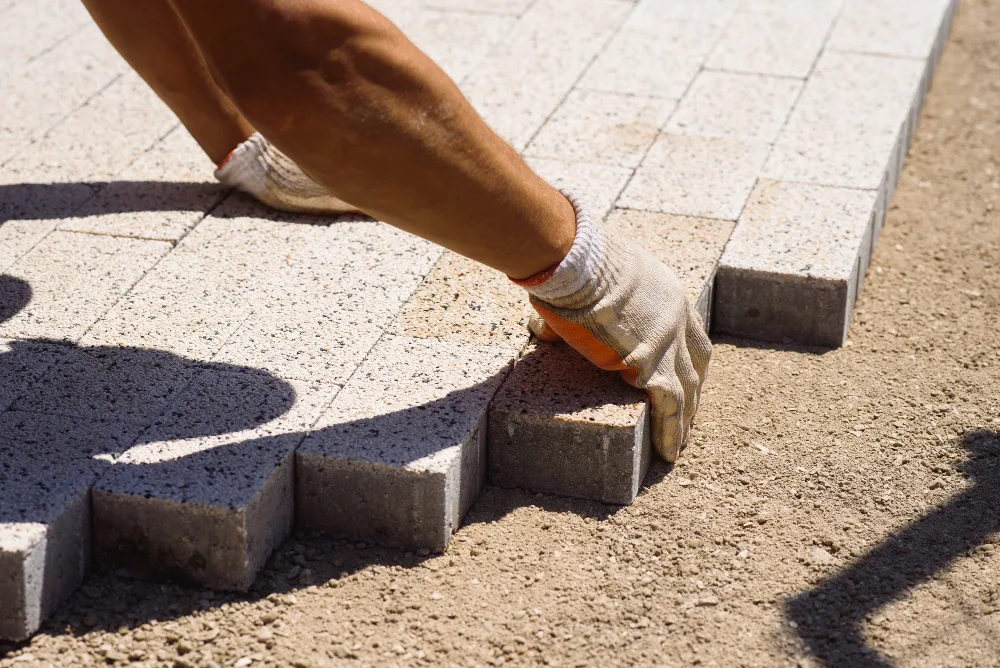
Deciding between poured concrete and pavers is one of the biggest choices you’ll make when upgrading your home’s exterior. Whether you're planning a new driveway in The Villages or a patio overlooking a lake in Orlando, both options have their champions. Poured concrete is often seen as the budget-friendly standard, while pavers are viewed as the premium upgrade. But when you factor in Florida’s unique climate and long-term maintenance, is the "cheaper" option actually less expensive in the long run?
This guide breaks down the real costs, from the initial installation to the 10-year mark, so you can make the best decision for your home and budget.
Is poured concrete always cheaper upfront?
Generally, yes, poured concrete has a lower initial price tag than pavers. For a standard concrete slab, you might pay between $6 and $12 per square foot, depending on the finish. This lower entry point makes it attractive for homeowners looking to cover a large area, like a long driveway, without a massive upfront investment.
However, the gap in pricing narrows when you start adding decorative elements. If you want stamped or stained concrete to mimic the look of stone, the cost can jump significantly, sometimes rivaling the cost of entry-level pavers.
How do paver costs compare?
Pavers usually cost more to install initially because the process is labor-intensive. Each stone must be placed by hand, and the ground preparation requires more steps to ensure stability. You can expect to pay anywhere from $12 to $25 per square foot for patio and driveway paver installation, depending on the material you choose (brick, concrete, or natural stone).
While the upfront cost is higher, you're paying for a system that is designed to move with the earth. In Florida, where the ground settles and shifts due to our sandy soil and heavy rains, this flexibility is a massive financial advantage over time.
Which option lasts longer in the Florida heat?
Durability is where the "true cost" conversation gets interesting. Poured concrete is strong, but it's prone to cracking. In Central Florida, we deal with intense heat and humidity. Concrete expands and contracts as the temperature swings between our scorching afternoons and cooler evenings. Eventually, almost all concrete slabs develop cracks.
Pavers are incredibly durable because they are a flexible pavement system. They can handle up to 8,000 PSI (pounds per square inch) of pressure, whereas standard concrete typically handles about 3,000 to 4,000 PSI. Because pavers are individual units, they can shift slightly with the ground movement without snapping. This makes pavers installation in The Villages Florida a smart investment for longevity, as the interlocking system resists the cracking that plagues solid slabs.
What about maintenance and repair costs?
This is where pavers often win the long-term financial battle. If a tree root uplifts a section of your concrete driveway, or if a utility line beneath it needs repair, you often have to jackhammer and replace the entire slab to fix it properly. Patching concrete rarely looks good; it usually leaves a visible scar that ruins the aesthetic.
With pavers, repairs are simple and cost-effective. If a paver gets stained by oil or cracks under extreme weight, you simply pull up that specific stone and replace it. If the ground settles and creates a dip, you can lift the affected area, add more base material, and replace the same stones.
Maintaining pavers does require some effort, specifically sealing them every 2-3 years to protect the color from the Florida sun. However, concrete also requires sealing to prevent staining, and keeping the cracks at bay can be a losing battle.
How do aesthetics affect property value?
Curb appeal puts money back in your pocket when it comes time to sell. Poured concrete is functional, but standard gray slabs don't add much "wow" factor. Stamped concrete looks better, but it can fade and look artificial over time.
Pavers offer unmatched design flexibility. You can choose from endless colors, patterns, and textures to complement your home’s architecture. Whether you're in a historic neighborhood near downtown Sanford or a new build in Lake Nona, a paver driveway or pool deck signals high quality to prospective buyers. Real estate experts often note that hardscaping with pavers yields a high return on investment (ROI), sometimes recovering nearly 100% of the installation cost upon resale.
Is the installation process difficult?
Pouring concrete is not a DIY-friendly job for most people. It requires precise mixing, pouring, leveling, and finishing before the material sets. One mistake in the mixture or timing can ruin the entire project.
Paver installation is also complex, but in a different way. It involves excavating the site, laying a sub-base of crushed stone, adding a layer of bedding sand, placing the pavers, and finally compacting them with polymeric sand. While some homeowners attempt this, professional installation ensures proper drainage and stability.
For example, when we handle pavers installation in The Villages Florida, we ensure the sub-base is perfectly compacted. This step prevents the sinking and shifting that often happens with amateur installations.
How does Florida’s climate impact your choice?
Our weather is tough on outdoor surfaces. We get over 50 inches of rain a year in Orlando. Concrete is non-porous (unless you install specialized permeable concrete), meaning water runs off it. This can lead to puddling or drainage issues near your home’s foundation.
Pavers, specifically permeable options or those installed with proper joint spacing, allow water to filter through the joints and back into the ground. This reduces runoff and is better for the local environment.
Additionally, concrete surfaces can become incredibly slick when wet, a hazard around pools. Pavers generally offer better traction, making them a safer choice for pool decks and walkways during our daily summer thunderstorms.
Are there eco-friendly considerations?
If environmental impact is a concern, pavers often have the edge. As mentioned, permeable pavers reduce stormwater runoff, which helps filter pollutants before they reach our waterways. Furthermore, if you ever decide to redesign your yard, pavers can be reclaimed and reused. Concrete usually ends up in a landfill.
We also see homeowners integrating pavers with other landscape features. For instance, combining a paver patio with a retaining wall installation can create tiered garden spaces that manage soil erosion effectively, an eco-friendly solution for sloped yards.
Why consider Axiom Integration perspective?
At Axiom Integration, we help homeowners and contractors visualize the potential of outdoor spaces. We know that the choice between concrete and pavers isn't just about the price tag today; it's about the value five or ten years from now.
From a design standpoint, we always advise clients to look at the "whole picture." If you have a Mediterranean-style home in Winter Park, a stark white concrete driveway might clash with the architecture. Pavers allow you to pull warm, earthy tones that tie the whole property together. It is about creating a cohesive look that feels intentional, not just functional.
A Driveway in The Villages
Consider a recent project involving pavers installation in The Villages Florida. A homeowner had a 15-year-old concrete driveway that was cracked and stained. The initial quote to tear out and pour new decorative concrete was around $9,000. The quote for high-quality pavers was approximately $11,500.
The homeowner chose pavers. Two years later, a heavy delivery truck cracked the edge of the driveway. Because they had pavers, the repair cost less than $200 and took an afternoon. Had that been the new concrete slab, the crack would have been permanent or required an expensive, unsightly patch. The slightly higher upfront cost saved them money and frustration almost immediately.
Transform your outdoor space
So, is it cheaper to pour concrete or put in pavers? If you look strictly at the day one bank transaction, concrete is cheaper. But if you look at the 10-year timeline, factoring in repairs, cracking, drainage, and property value, pavers often emerge as the smarter financial choice. They offer beauty, durability, and a forgiveness to Florida’s shifting soil that concrete simply cannot match.
Before you pour a slab that is guaranteed to crack, consider the long-term value of a flexible, beautiful paver system.
Don't settle for a cracked driveway or a boring patio. Contact Benchmark Pavers today at (352) 651-6077 for a consultation and estimate. Let us help you build a foundation that lasts