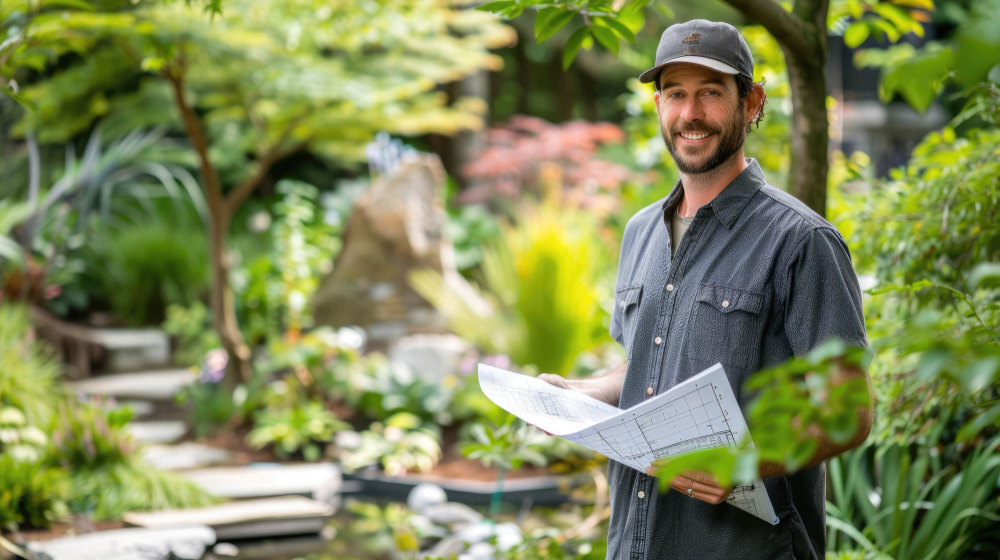
Picture this: You’ve just bought a beautiful home in The Villages, and you’re dreaming of a backyard oasis. You envision a new paver patio for grilling, a retaining wall to level out the slope, and maybe some vibrant tropical plants. You hire the first person who knocks on your door offering a great deal. Two weeks later, the work is half-done, the "contractor" is ghosting you, and you find out the hard way that Florida has strict rules about who can and can't perform specific landscaping tasks.
Understanding Florida’s licensing laws isn't just about red tape; it's about protecting your property and your wallet. Hiring an unlicensed worker for a job that requires a license can lead to shoddy workmanship, voided insurance claims, and legal headaches.
Landscaping is a broad term that covers everything from mowing the lawn to installing complex irrigation systems. However, the State of Florida draws a distinct line between "maintenance" and "construction."
General yard maintenance typically includes tasks like mowing, trimming hedges, weeding, and planting flowers in existing beds. These services generally do not require a state contractor’s license, though a local business tax receipt (formerly known as an occupational license) is usually needed to operate legally.
On the other hand, tasks that involve altering the property structure, installing permanent fixtures, or changing the grade of the land fall under construction. This includes patio and driveway paver installation, irrigation installation, and building retaining walls. These jobs often require specific state or local competency licenses.
The short answer is: It depends on the scope of the work. If you're hiring someone just to cut your grass and edge the sidewalk, a state contractor's license isn't necessary. However, if the job involves structural changes or specialized skills, the requirements change.
For homeowners in communities like The Villages or nearby Wildwood, it is crucial to verify if your specific project demands a landscape contractor The Villages Florida trusts for compliant work.
Here is a breakdown of common scenarios:
If you're planning to install a driveway, a patio, or any hardscaping that becomes a permanent part of the property, you generally need a licensed professional. This ensures the base is prepared correctly and the materials are installed to code, preventing sinking or shifting later on.
Installing or repairing a sprinkler system requires a license in many Florida counties. Improper installation can lead to water waste, high utility bills, and even damage to your home’s foundation if water is directed incorrectly.
Building a wall to hold back soil is serious business. A poorly constructed wall can collapse, causing injury or property damage. For this reason, retaining wall installation usually requires a licensed professional who understands load-bearing requirements and drainage.
Yes, there are specific situations where a license might not be mandatory. Florida law provides exemptions for "basic" landscaping services.
For example, a person can mow lawns, trim shrubs, and spread mulch without a state contractor's license. Furthermore, Florida Statute 489.105 allows for the installation of pavers without a license if the work does not involve a permanent structure or a pool deck. However, many local municipalities, including Orange and Sumter counties, have their own ordinances that may be stricter than state law.
Even if a license isn't technically required for a small job, hiring an experienced landscape contractor The Villages Florida residents recommend is often the safer bet. They are more likely to carry general liability insurance, which protects you if they accidentally damage your property—like sending a rock through your sliding glass door while mowing.
Hiring unlicensed labor might save you a few dollars upfront, but the long-term risks are significant.
If an unlicensed worker is injured on your property, you could be held liable for their medical bills because they likely don't carry workers' compensation insurance. Additionally, if the work is substandard, you have very little recourse. You might end up paying a second, licensed contractor to tear out the bad work and redo it—effectively paying double for the same job.
Work performed without necessary permits can result in fines from your local code enforcement. In some cases, you may be forced to remove the unpermitted work entirely. For instance, an unpermitted retaining wall that violates setback rules in a neighborhood like Winter Park or Baldwin Park could trigger a code enforcement citation costing hundreds of dollars per day until fixed.
Unlicensed contractors are harder to track down if they take your deposit and disappear. Licensed professionals are registered with the state, making them accountable for their business practices.
Checking a license is easier than you might think and takes only a few minutes. You can verify a state license through the Florida Department of Business and Professional Regulation (DBPR).
For local competency cards (often required for paving or irrigation in specific counties), you may need to check with your county’s building department.
Cost is often the biggest factor homeowners consider, but knowing the "normal" range helps you spot a bid that is too good to be true.
For example, a new residential asphalt driveway in the Central Florida area typically costs between $3 and $7 per square foot. If someone quotes you $1.50 per square foot, they are likely cutting corners on materials or lack the proper licensing and insurance.
Similarly, professional pool resurfacing with a pebble finish runs between $8,000 and $15,000. These are significant investments, and trusting them to someone without the proper credentials is a gamble that rarely pays off.
Florida is unique. From our sandy soil to our intense weather, building here requires specific knowledge. A landscape contractor The Villages Florida homeowners rely on will understand how our summer thunderstorms—which drop huge amounts of water in minutes—affect drainage on a patio. They know that the intense UV rays can fade cheap pavers in a year or two.
Local professionals also understand the specific HOA requirements found in communities like Lake Nona or Windermere. Getting a project approved by an Architectural Review Committee (ARC) is much smoother when your contractor knows the rules beforehand.
When it comes to improving your home, due diligence is your best defense. While you don't need a licensed pro to mow your grass, major projects like driveways, patios, and retaining walls are different beasts. Ensuring your contractor is properly licensed and insured protects your home, your finances, and your peace of mind.
Don't let your dream project turn into a nightmare. If you're looking for a reliable team to handle your next hardscaping project, we are here to help. Contact Benchmark Pavers at (352) 651-6077 to schedule your consultation today.
Don’t hesitate to get in touch with us today to schedule a consultation and learn how we can help you achieve your construction goals.